Herding Is Hard—And That’s Exactly Why It’s Worth It
Sep 16, 2026Written by Dawna Sims | PSR Stockdogs
If you’ve ever walked off the field feeling overwhelmed, frustrated, or wondering if you’ll ever figure this herding thing out, you’re not alone.
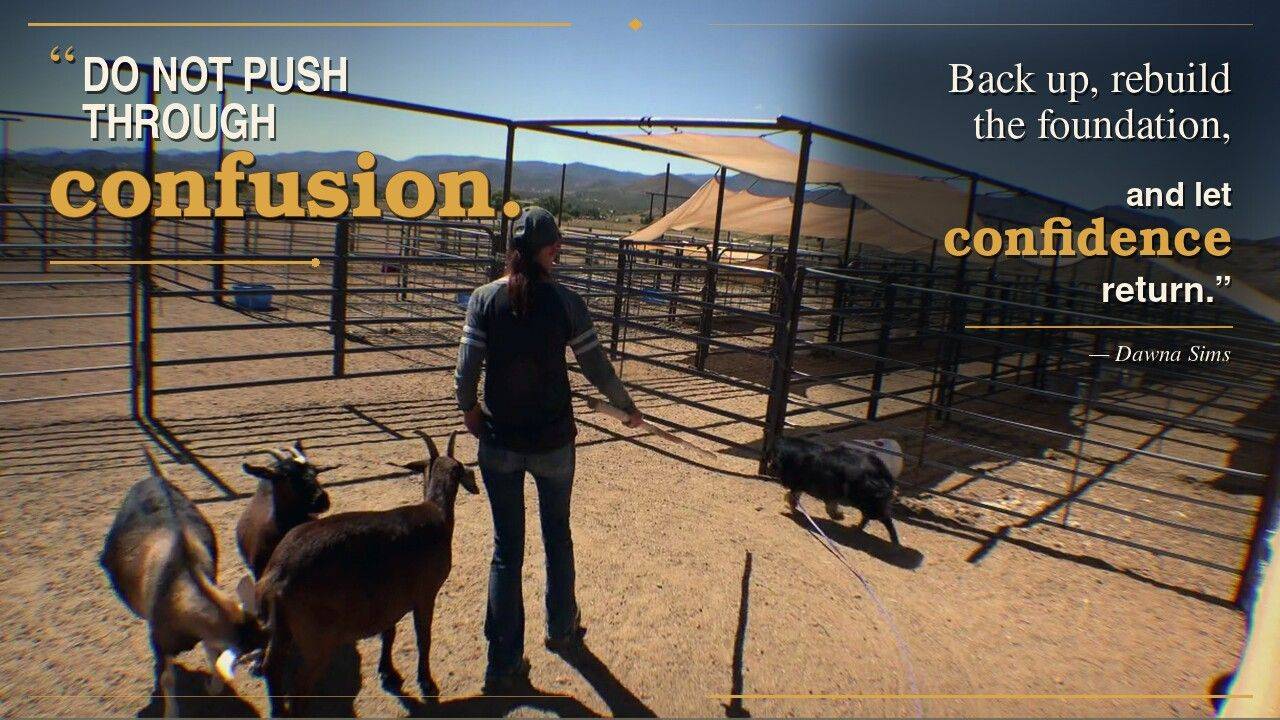
Learning to herd with your dog is, in our opinion, one of the hardest things you will ever do together. Not because your dog isn’t capable and not because you aren’t trying hard enough. It’s hard because there are so many moving parts, and every one of them matters.
Your Dog Is Listening to Two Voices
One of the biggest challenges in herding is that your dog has something you don’t—powerful instinct. We often call it the voice in their head.
That voice has been developed over generations. It tells your dog how to control livestock, where to apply pressure, when to cover an escape, and how to respond to movement. Sometimes the voice in their head is screaming much louder than anything we are saying.
Now imagine what happens when we ask our dog to do something that completely conflicts with that instinct. Your dog has a choice to make. Do they listen to you and ignore what every instinct in their body is telling them? Or do they follow their instinct and risk being corrected? That is a very confusing place for a dog to be.
We Make Mistakes—Lots of Them
The reality is that beginning handlers make mistakes, every single one of us has.
We ask our dog to lie down in a position that takes them completely out of control of the stock, allowing the sheep to escape. From our perspective we’re simply asking for obedience, but from the dog’s perspective we have just made a huge handling mistake.
For a dog with strong stock instincts, keeping control of the livestock is one of the most important jobs in the world. When we repeatedly put them in positions where they lose control because of our decisions, trust begins to break down.
Then there are all the other common mistakes:
- We give the wrong flank and then correct the dog for taking the command we gave.
- Our body language says one thing while our voice says another.
- The dog follows our body because that’s what dogs naturally read, then gets corrected because our words meant something different.
- We stop watching the sheep and ask the dog to do something that doesn’t fit what the stock is doing.
- We don’t understand the draw and insist the dog always stay behind the stock when they actually need to cover an escape.
And honestly…
The list goes on and on. There is an enormous learning curve, and it creates a lot of confusion for our dogs.
Herding Doesn’t Break Down Into Simple Pieces
One of the reasons herding is so different from many other dog sports is that it’s difficult to isolate individual skills.
In obedience, agility, rally, or tricks, you can teach one small behavior at a time. Once each piece is solid, you simply put them together. Herding doesn’t allow us that luxury.
Too often we’re trying to teach everything at once. We are asking our dogs to balance stock, take commands, control pressure, manage movement, rate their speed, and think independently—all while everyone is moving. The sheep are running, the dog is running, the handler is running. Lets face it - that isn’t exactly an ideal learning environment.
Trying to teach new behaviors in a high-arousal situation is incredibly difficult for everyone involved.
You’re Learning More Than Dog Training
Many new handlers arrive knowing very little about livestock.
Now they have to learn:
- How sheep think.
- How sheep respond to pressure.
- Where they naturally want to go.
- How to read the stock.
- Where to move their own body.
- How their position affects both dog and livestock.
- An entirely new vocabulary.
At the exact same time, they’re trying to train a dog who already has very strong opinions about how those sheep should be handled. Have I mentioned learning herding is hard?
Then There Is the Conversation
One of the most important skills any stockdog handler develops has nothing to do with whistles or commands. It is learning to read the conversation happening between the dog and the stock.
The sheep are constantly communicating, and so is the dog.
Sometimes the sheep suddenly panic and run away while your dog appears to be doing absolutely nothing. Why? Because there was a conversation happening that you didn’t yet know how to see. Learning to recognize that conversation—and then helping your dog have the right conversation with the livestock—is one of the biggest skills you’ll ever develop.
Managing Arousal Is Part of the Job
Some dogs become so overwhelmed by movement that thinking completely disappears. The sheep move, the instinct explodes and the dog starts chasing. At that point, simply giving more commands rarely solves the problem.
Instead, we have to ask different questions. How do we lower arousal? How do we help the dog settle? How do we create an environment where the dog can think instead of simply reacting?
These are training problems, not obedience problems, and they require thoughtful solutions.
Preserve the Instinct—Don’t Fight It
Perhaps the greatest challenge in herding is finding the balance.
We need enough control that our dogs can safely work livestock, but we also need to give our dogs enough freedom that they can use the instinct that made us fall in love with stockdogs in the first place.
Our goal isn’t to replace instinct with obedience - our goal is to guide instinct with understanding. The very thing that makes herding beautiful is the dog’s ability to think, solve problems, and communicate with stock. We never want to train that out of them.
Making Herding Easier
At PSR Stockdogs, we’ve spent years developing a system that slows the learning process down.
Instead of trying to teach everything at once, we break each skill into manageable pieces and create training setups where both dog and handler can succeed. We reduce unnecessary chaos so sheep aren’t constantly running, allowing dogs to stay in a more thoughtful state of mind. That gives handlers the opportunity to observe, learn, and make better decisions instead of simply reacting.
Most importantly, our system preserves the dog’s natural instinct while giving them the clarity they need to become confident, thoughtful working partners.
The Hardest Thing You’ll Ever Do—And the Most Rewarding
There is no shortcut to becoming a good stockdog handler. You will make mistakes and your dog will make mistakes. You’ll have days when nothing seems to go right.
But you’ll also experience moments unlike anything else in dog training—moments when you and your dog truly become a team, communicating almost without words as you work livestock together. Those moments are why we keep coming back.
Herding is hard. It will likely be one of the most challenging and frustrating things you ever learn. It may also become one of the most rewarding journeys you and your dog ever share.
About Dawna Sims
Dawna Sims has more than 21 years of hands-on experience training dogs and handlers to work livestock and is the author of The Rules of the Hunt. She leads PSR Stockdogs with Megan Sims-Kennedy; together they were named 2025 Herding Breeder of the Year by the American Kennel Club, and their program is ASCA Hall of Fame Excellent Kennel #25.
Get The Working Line in your inbox
Straight talk on training the working stockdog: new posts, training insights, and what we're learning on stock. No fluff, no spam.
We'll never sell your information or clutter your inbox.
