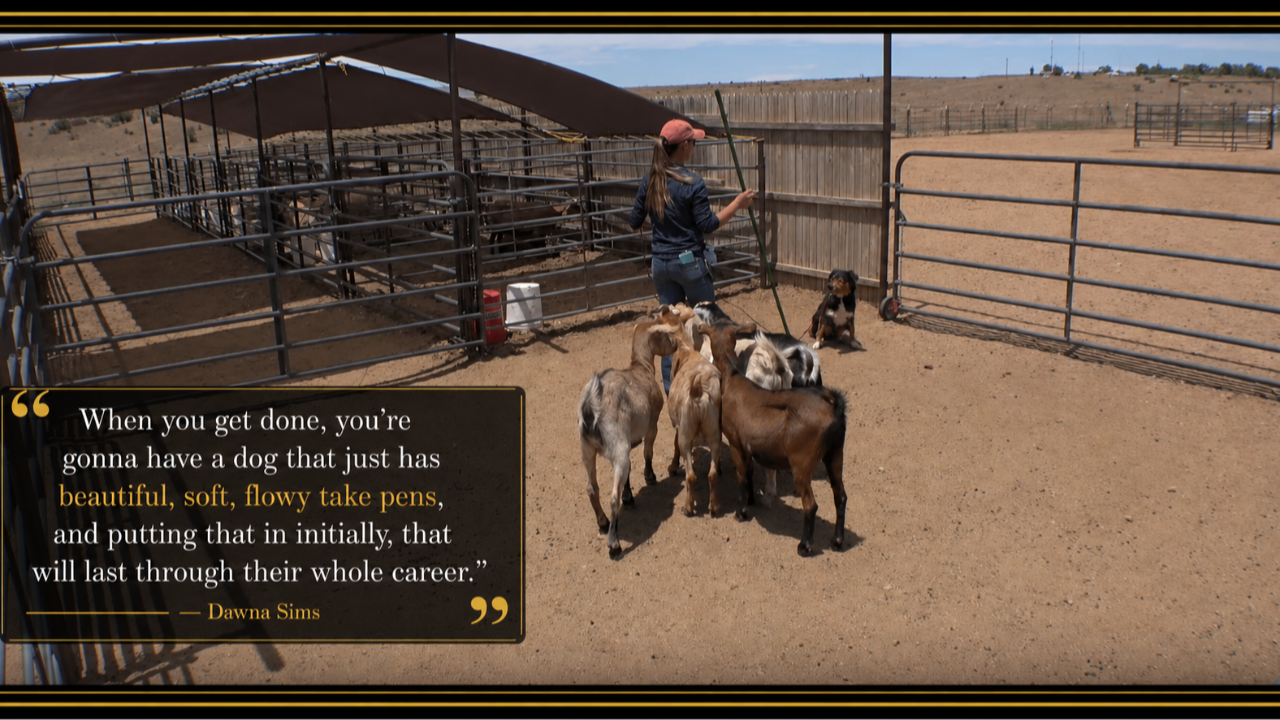
How Important Is a Good Take Pen?
Sep 09, 2026Written by Dawna Sims | PSR Stockdogs
Think of the take pen as your dog shaking hands with the stock when they meet for the first time.
That first conversation will absolutely set the tone for the work you are about to do—or the run you are about to have. Your dog’s approach tells the stock what they can expect. It can say, “I am here to take control and guide you,” or it can say, “I am a threat.”
Why a Bad Take Pen Creates Panic
If your dog enters the take pen like they mean to do harm, the stock will immediately feel trapped and threatened. They will panic, and their only thought will be to escape.
Many dogs become over-aroused under the pressure of working in a small pen. They may come in too hot or bust through the middle of the stock. They may begin to go around correctly and then cut the stock off because they feel like the first ones are getting away. In their effort to maintain control, they actually create more panic.
Other dogs come into the pen and lock onto the stock, using too much eye and pressure. Instead of encouraging the stock to flow out of the pen, they trap them in place.
All of these things make the stock feel threatened. They want nothing more than to bolt out of the pen. When they do, the movement excites the dog even more.
Now everyone is in a panic. The stock bolts out of the pen, the dog takes off in hot pursuit, and the handler is scrambling to regain control.
That is not a good start to anything.
For the rest of your work session—or the rest of your run at a herding trial—you may be trying to manage stock that won’t settle and is constantly looking for a way to escape. At the same time, you are trying to manage a dog that is over-aroused and unable to think clearly. This is not fun for anyone, but more importantly, it is extremely stressful for the stock.
What a Good Take Pen Looks Like
A good take pen creates a completely different beginning.
When you have taken the time to teach your dog good skills in the pen, the stock can come out feeling calm, controlled, and settled. They understand that the dog is in control and will calmly tell them where to go without chasing, gripping, or harassing them. The stock respects the dog, but they don’t fear them.
This creates happier, more relaxed stock. It also gives you a calmer dog and a much more confident handler. Instead of spending the rest of the run trying to repair a bad beginning, you can simply get on with the job.
Teaching Take Pen Skills
Having a dog that quietly enters the pen, uses the space available to flow around the stock, and releases pressure so the stock can come out takes time and dedication.
We must make sure the dog is comfortable working within the pressure of a smaller space. They need to understand that their job is not simply to make the stock move. Their job is to calmly take the stock out of the pen so they can be moved somewhere else. They also need to learn how to offer that calm, firm handshake.
The stock should believe the dog and understand that challenging them will not work. At the same time, they should feel safe and not over-pressured. This comes very naturally to some dogs but for others, it takes more time. Every dog is different, and each one has their own strengths and weaknesses.
If the take pen is difficult for your dog, don’t worry. It will come if you are willing to make it a focus and take the time to teach each part of the job.
Break the Take Pen Down Into Steps
One of the biggest challenges often happens as the stock begins to leave the pen. A young or inexperienced dog may panic because they feel like the stock is escaping. They may blast through the group in an effort to get to the other side and stop them as quickly as possible, once again, everyone is in a panic—including the handler.
This is why it is so important to break the take pen down into steps. We need to teach a young dog how to go into the pen, how to greet the stock, and how to stop and allow them to come out. Then we need to teach the dog how to come out of the pen and stop if needed—or how to calmly flank around and take control of the stock without creating unnecessary panic.
Throughout the entire process, the dog is having a conversation with the stock:
“I am not a threat. I am here to take control of you, and I will guide you where you need to go.”
So many times, we are in a hurry. We want to work on the more exciting or advanced parts of herding, so we don’t take the time to work on the small things. However the small things are often what determine the quality of everything that follows.
The take pen may seem like one small part of a run, but it is the first conversation between your dog and the stock. It sets the emotional tone for the entire job.
Take the time to teach your dog how to offer a calm, confident handshake. That first conversation can make all the difference in the work that follows.
Want Help Building a Calm, Controlled Take Pen?
The Take Pens with Quiet Control course breaks the job into clear steps so your dog can bring stock out calmly without creating unnecessary panic.
Explore Take Pens with Quiet Control
About Dawna Sims
Dawna Sims has more than 21 years of hands-on experience training dogs and handlers to work livestock and is the author of The Rules of the Hunt. She leads PSR Stockdogs with Megan Sims-Kennedy. PSR Stockdogs was named the 2025 AKC Herding Breeder of the Year. Learn more about Dawna and Megan.
Get The Working Line in your inbox
Straight talk on training the working stockdog: new posts, training insights, and what we're learning on stock. No fluff, no spam.
We'll never sell your information or clutter your inbox.
