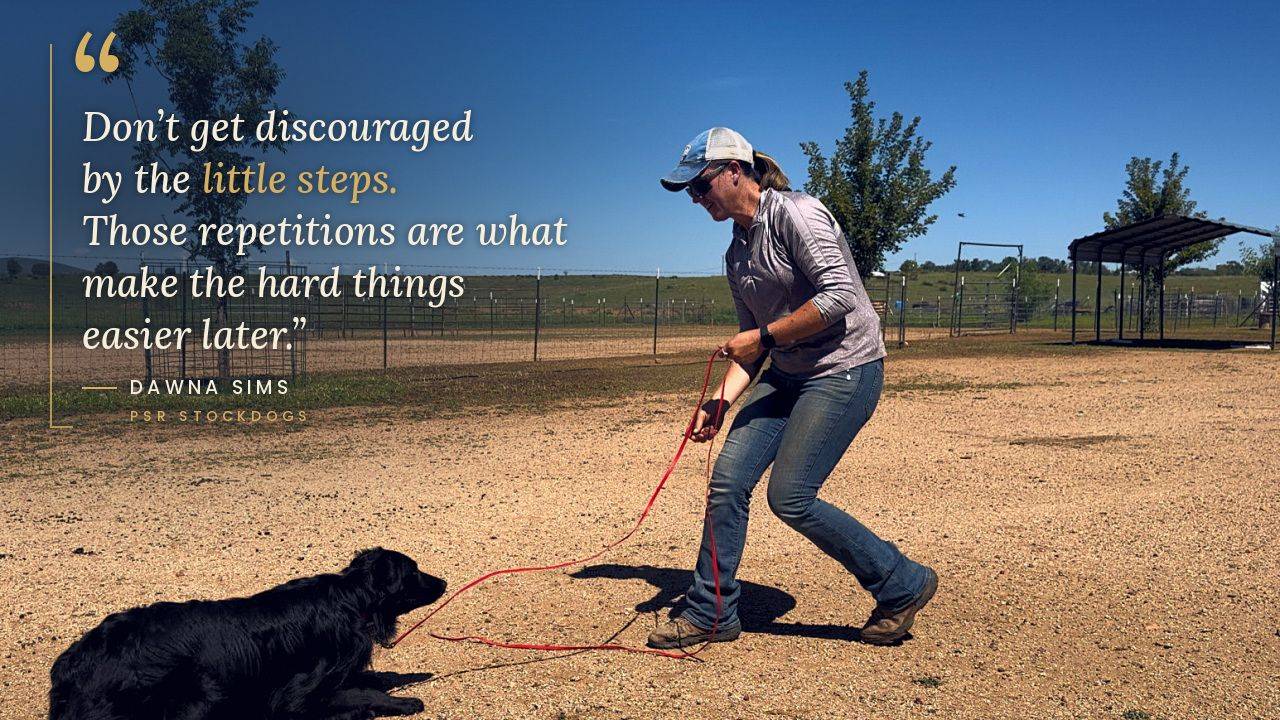
Why a Crisp Stop Is One of the Most Important Skills in Stockdog Training
Oct 07, 2026Some dogs seem to come with a natural stop on stock. You ask them to lie down, their feet stop, and they are perfectly happy to wait for the next direction.
For other dogs, getting that same crisp, reliable stop can be one of the biggest challenges in their stockdog training.
And there is usually a reason.
Understanding why your dog struggles to stop is an important part of teaching a reliable stop they understand, trust, and are willing to give you—even when the livestock is moving.
Why Is Stopping So Hard for Some Herding Dogs?
The answer can depend on the breed, the individual dog, the livestock, and the situation.
For some breeds, staying in motion is simply part of their natural working style. Many tending breeds are a good example of this. A German Shepherd may naturally want to remain in motion because movement is an important part of how that dog works and influences livestock.
For other dogs, their power is in their motion. Stopping them at the wrong time or in the wrong place may take away some of their ability to influence and move the stock.
Then there are dogs with such a strong instinct to control livestock that stopping can feel completely wrong to them if they don’t believe the stock is secure.
Think about it from the dog’s perspective.
If the livestock is escaping and the dog isn’t confident that they can catch and control it again, why would stopping make sense? This can be especially challenging for a dog that doesn’t believe they can easily catch escaping stock. A Corgi, for example, may feel very differently about stopping and allowing stock to get away than a dog with the speed and confidence to quickly regain control.
For some dogs, the biggest challenge isn’t stopping—it is stopping while the livestock is still moving.
When the stock is settled, they can stop beautifully, but as soon as those animals are in motion, instinct takes over. The movement draws the dog forward, and suddenly stopping those feet or lying down becomes incredibly difficult. This is why teaching a good stop isn’t simply about obedience.
We have to understand what the dog is feeling and what the livestock is telling the dog at that moment.
Why Is a Reliable Stop So Important?
A solid stop gives us the ability to influence the entire picture.
When we can stop our dog exactly where we need to, we can:
- Settle the livestock and take pressure off them.
- Regain our dog’s attention when needed.
- Help a dog regulate and “reboot” when arousal is getting too high.
- Stop the work safely and cleanly.
- Create a clean line when moving livestock forward.
- Move stock calmly from one pen to another.
- Get our stock off of a gate so we can clear the opening.
- Hold livestock exactly where we need them.
- Create more thoughtful, controlled work instead of simply reacting to movement.
A good stop isn’t just a command, it is one of the tools that allows us to shape the entire job.
How We Build a Reliable Stop on Stock
For many dogs, developing a solid stop takes time, patience, practice, and consistency. We don’t expect the finished behavior all at once, we build it step by step.
Step 1: Make Sure the Dog Understands the Stop Away From Stock
Before asking for a difficult stop around livestock, the dog should clearly understand what the stop means in less challenging situations, then we add distractions.
Can the dog stop around a ball or toy?
Can they stop when other dogs are running and playing?
We want the dog to have a very clear understanding of the behavior before adding the intensity and instinct that come with livestock.
Step 2: Introduce the Stop in a Small, Controlled Area
Once the dog understands the stop away from stock, we begin asking for it while working livestock—but we make the situation as easy as possible.
We might start in a small pen where the stock cannot simply leave. Now the dog doesn’t have to worry that stopping will mean losing control of the livestock and that really matters.
We want the dog to learn:
“When my handler asks me to stop, it is safe to stop and I get to stay in control of my stock.”
Step 3: Give the Dog Control Before Asking for the Stop
Once the dog is comfortable stopping in the smaller area, we can move to a larger pen, but we still don’t immediately ask for the most difficult version of the exercise.
We may initially ask for the stop when the stock is settled in a corner. The dog feels that the livestock is under control and nothing is escaping. There is less conflict between what instinct is telling the dog to do and what we are asking the dog to do.
As the dog’s confidence and understanding increase, we gradually ask for the stop in more difficult situations.
Step 4: Don’t Progress Until the Dog Is Truly Comfortable
This is where patience matters.
As we increase the difficulty, we want the dog to be truly solid and comfortable with each step before moving on.
Not “pretty good.”
Not “usually.”
Solid.
If the dog is struggling, that is information. Instead of immediately adding more pressure, we may need to make the picture easier again so the dog can understand what we want.
Don’t Ask Your Dog to Stop and Lose the Stock
This is incredibly important in early training.
We don’t want to repeatedly ask a young or inexperienced dog to stop in a place where doing so causes them to lose the livestock.
Why?
Because we are teaching the dog something whether we realize it or not.
If stopping when we ask repeatedly results in the stock escaping, the dog can begin to lose confidence in our decisions. Even worse, the dog can begin to associate the stop itself with something negative:
“When I stop, I lose my stock.”
Then we wonder why the dog starts fighting us every time we ask for a down.
We want our dogs to learn that listening to us helps them control livestock—not that listening to us causes them to lose control. That trust is something we build and is vitally important in our training.
Don’t Let the Stop Slowly Become Optional
Even after we have developed a beautiful stop, our work isn’t finished, we need to maintain it.
It is incredibly easy to let our criteria slowly slip.
We ask for the stop.
The dog takes another step.
Then another.
We decide it isn’t worth addressing this time.
Before long, the crisp stop we worked so hard to develop has turned into a suggestion. This isn’t because the dog is “taking advantage” of us, we have simply taught the dog that the criteria changed.
If sometimes “stop” means stop immediately and other times it means “stop somewhere over there eventually,” we shouldn’t be surprised when the dog becomes unclear about what the word actually means.
Clarity matters.
A Good Stop Is Worth the Work
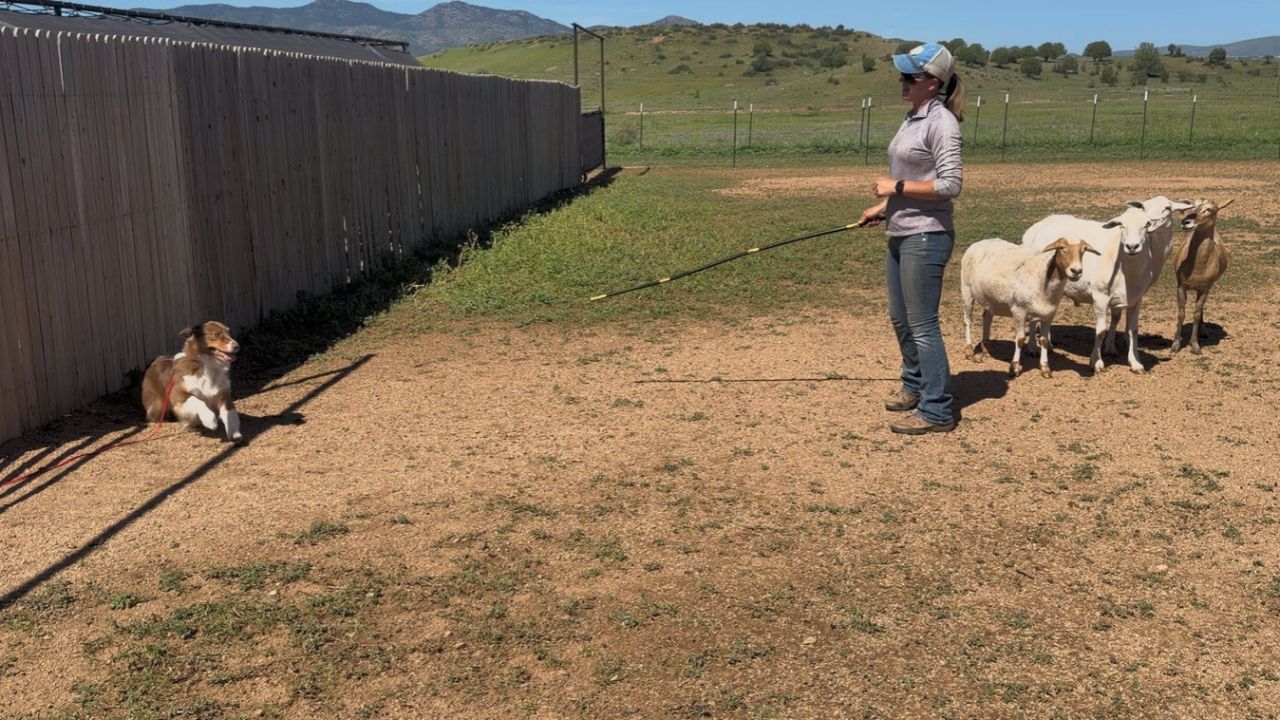
At PSR Stockdogs, we believe the stop is so important that we have developed two online courses with exercises and clear, progressive steps specifically designed to help handlers build a reliable stop on stock.
Building a Moving Stop develops the stop through clear foundation work, movement, distance, and distractions. Building a Reliable Stop carries that work into the livestock environment with timing, position, and stock-aware handling.
For some dogs, developing that stop will come easily.
For others, it may be one of the hardest things you teach.
Either way, stay the course.
Take your time. Build the behavior thoughtfully. Make sure your dog understands each step before increasing the difficulty, and don’t ask your dog to do something that doesn’t make sense in the picture you have created.
If you are willing to put the time into developing a good stop early in your stockdog training, it will pay off again and again.
Eventually, you won’t just have a dog that has to stop.
You’ll have a dog that understands why it is okay to stop, trusts you when you ask for it, and is comfortable giving you that stop wherever you need it.
And that makes the work easier, calmer, and clearer for both you and your dog.
The two stop courses are also included in PSR Membership, along with the complete PSR course library, Next Steps, Real Talk, and new courses added while your membership is active.
Get The Working Line in your inbox
Straight talk on training the working stockdog: new posts, training insights, and what we're learning on stock. No fluff, no spam.
We'll never sell your information or clutter your inbox.
