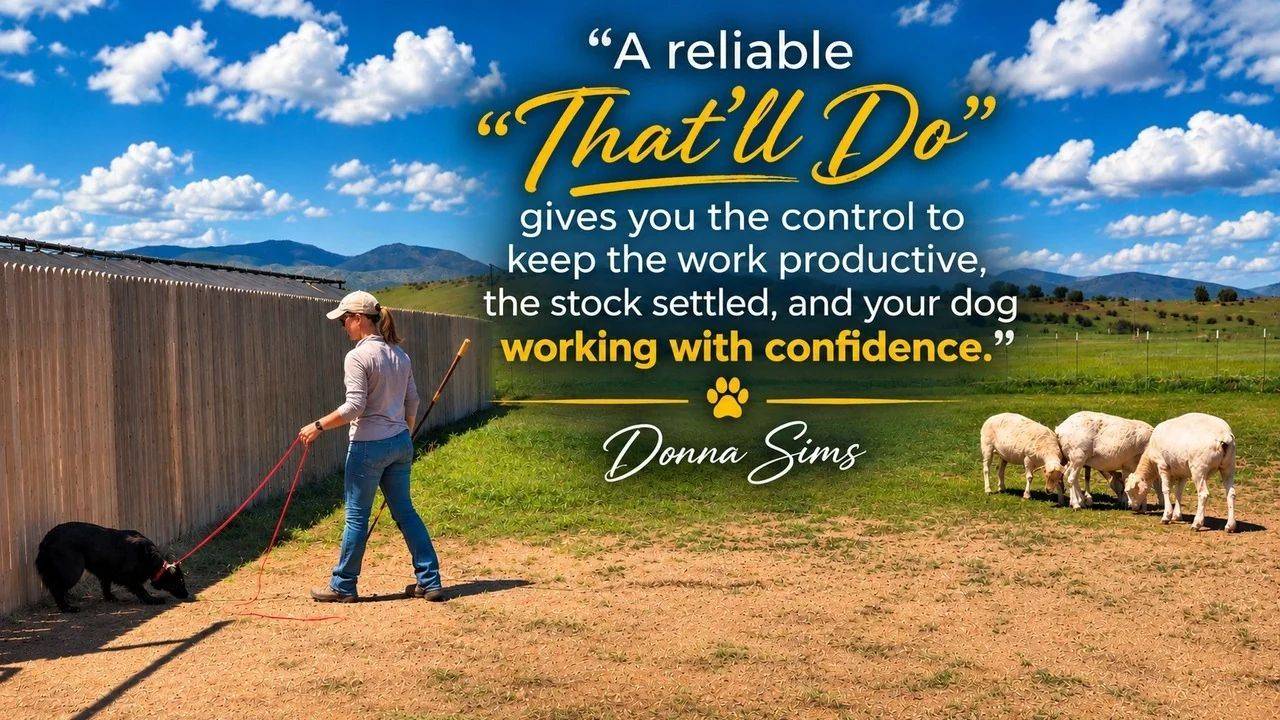
Why a Solid “That’ll Do” Matters in Stockdog Training
Nov 04, 2026Written by Dawna Sims | PSR Stockdogs
A young dog that loves to work stock usually has one thing on its mind: more! More movement, more opportunity, and more time doing the thing it loves. Coming back to you and leaving the stock may be the last thing that dog wants to do.
That is why a solid “That’ll Do” deserves thoughtful training. It is one of the most important skills we teach our stockdogs, both for everyday work and for those moments when we need to bring a situation back under control. We want our dogs to respond willingly while keeping their enthusiasm for the work.
What “That’ll Do” Means
In our training, “That’ll Do” means stop working, leave the stock, and come to me.
That is a big request for a young, enthusiastic dog. We are asking it to turn away from something it finds tremendously rewarding and choose us instead. If we ask before we have built the skills to support that choice, we can create frustration on both ends of the leash.
The dog wants to keep working. We want it to come. Soon we may find ourselves repeating the command, getting louder, or correcting a dog for something we have not adequately prepared it to do.
We want a dog that loves to work. Our job is to teach that dog how to leave the work, too.
Protect the Desire to Work
In early training, we do not ask a young dog to call off stock before it is ready. When we are finished, we either put the stock away or safely get a leash on the dog and lead it away. We arrange the session so we can do that without chasing the dog or creating a struggle.
This gives us a way to end the session while the recall is still developing. We do not have to turn “That’ll Do” into a test the dog is likely to fail.
A dog’s eagerness tells us that the work matters to it. We can appreciate that desire while building the understanding and response we will need later.
Build the Recall Before You Need It
The foundation of a willing “That’ll Do” is a super solid recall, and we put a tremendous amount of emphasis on making that recall fast and fun.
How do we do it? Games, games, and more games!
We start small with chase and catch-me games that encourage the dog to drive toward us with enthusiasm. We want coming to us to feel like an opportunity. When the dog gets there, something wonderful should happen.
Whatever lights your dog up belongs in that reinforcement: a fierce game of tug, generous high-value food rewards, or a big, happy party together. Choose what your dog actually enjoys. The reward needs to matter to the dog receiving it.
We believe so strongly in this foundation that we created an entire course of fun games devoted to teaching this one behavior.
Add Distractions a Little at a Time
Once the dog is driving to us eagerly in an easy setting, we begin adding distractions. We might work around food, toys, or another calm dog before progressing to dogs moving, running, and playing.
We build the challenge slowly so the game stays fun and the dog stays successful. We also change one part of the challenge at a time. A moving distraction close by is a very different request from a quiet distraction far away.
If the dog cannot turn away and come, that is useful information. We may need more distance, an easier distraction, or more practice at the previous level. Repeating the cue louder does not fill a gap in the training.
We want the dog rehearsing an enthusiastic response, with plenty of reinforcement when it gets to us.
Bring the Recall Around Stock
Stock is the last major distraction we introduce. For many dogs, it will be the biggest challenge of all.
We begin at a distance where the dog can notice the stock and still respond to us. We reward that response generously, then gradually work toward more challenging situations as the dog shows it is ready.
There is also a difference between recalling near stock and recalling away from actively working it. Success beside a quiet pen does not automatically mean the dog is ready to leave moving sheep in the middle of working. That transition deserves its own careful progression.
Where appropriate, coming to us can sometimes be followed by permission to work again. This helps prevent every recall from predicting the end of all the fun. Other times, the session really is over, and we still make arriving with us rewarding.
Give “That’ll Do” a Meaning the Dog Understands
Once the dog can reliably disengage from stock and recall, we introduce the words “That’ll Do.” We say the new cue just before the familiar recall cue, reinforce the response, and gradually fade the extra help as the dog learns what the new words mean.
The behavior comes first. Then we give it its working name.
With that foundation, “That’ll Do” can become a clear, familiar request. The dog understands how to respond and has a strong history of good things happening when it comes to us. We keep reinforcing it, even after it looks easy.
Your Safety Net on Stock
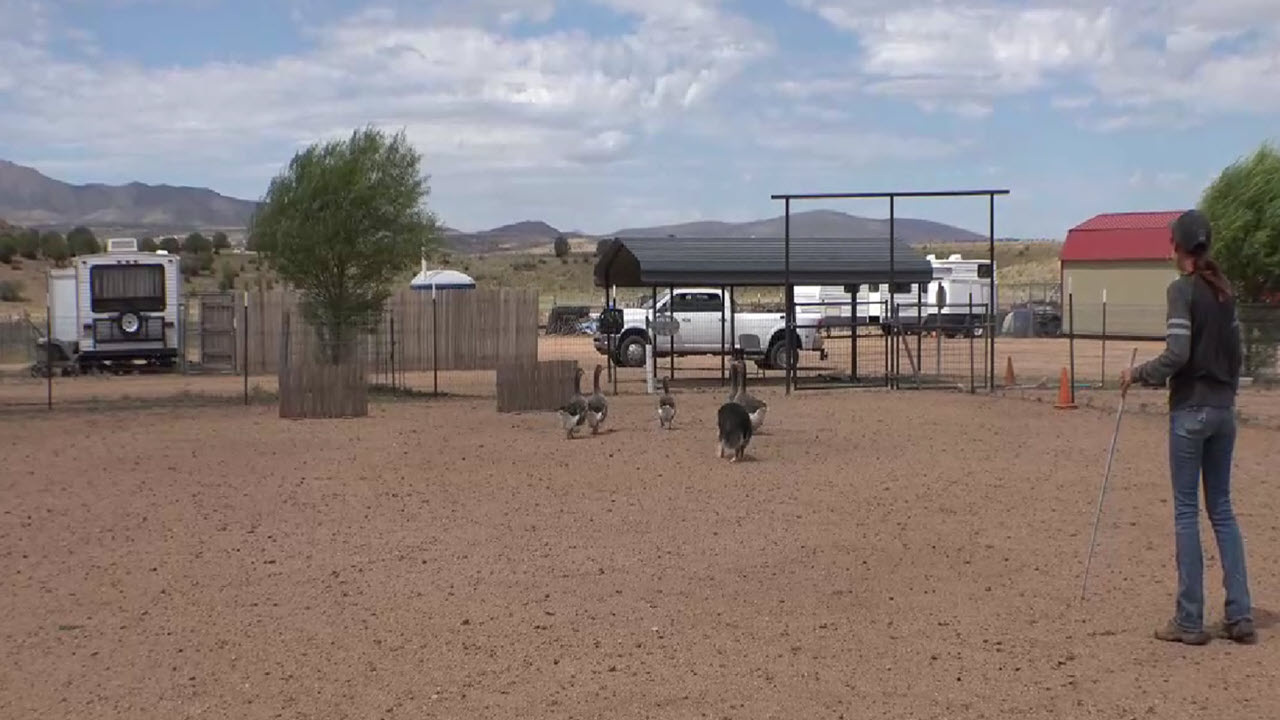
A reliable “That’ll Do” gives you a way to interrupt work and bring your dog back when you need to regroup. Perhaps the stock is becoming unsettled, your dog is getting overwhelmed, or the work is heading in a direction you did not intend.
Being able to call your dog away helps you protect the stock, your dog, and the people involved. It supports safe handling alongside suitable stock, secure facilities, and thoughtful decisions about what your dog is ready to do.
Take the time to build the recall. Play the games. Reinforce the dog that comes running to you. Introduce the hard distractions gradually, and protect the enthusiasm that made your dog want to work in the first place.
We want dogs that love the work and willingly come back when we say, “That’ll Do.” Both deserve to be taught.
About Dawna Sims
Dawna Sims has more than 21 years of hands-on experience training dogs and handlers to work livestock and is the author of The Rules of the Hunt. She leads PSR Stockdogs with Megan Sims-Kennedy; together they were named 2025 AKC Herding Breeder of the Year.
Get The Working Line in your inbox
Straight talk on training the working stockdog: new posts, training insights, and what we're learning on stock. No fluff, no spam.
We'll never sell your information or clutter your inbox.