What If.....
Jul 08, 2026Written by Dawna Sims | PSR Stockdogs
What if your dog biting the stock isn’t him being a “bad” dog, but an unconfident one? What if he doesn’t yet feel he has the presence, timing, or authority to move stock without using his teeth? Or maybe when the stock push back on him, he simply doesn’t understand how to handle that pressure yet. Biting might not be defiance—it might be uncertainty.
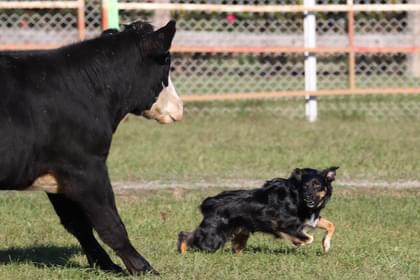
What if your young dog that seems to be “blowing you off” and won’t stop when asked is actually trying to follow her instincts? What if, in her mind, stopping before she has control of the stock would be the wrong choice? She may not be ignoring you—she may be doing what she believes is necessary. That tells us she needs help learning how to balance instinct with partnership.
What if your dog that “chases” a sheep that splits off isn’t being wild or reckless, but is honestly trying to solve a problem? He sees something leaving the group and knows it doesn’t belong—but he hasn’t yet developed the skill or feel to bring it back calmly and correctly. His intention is right, even if his execution still needs shaping.
What if your dog who is pushing the stock too fast, won’t rate, and seems like she isn’t listening is actually in a state of over-arousal? When a dog is too “high,” thinking becomes difficult. Learning can’t happen there. Maybe the missing piece isn’t more pressure—but helping her find a mental state where she can slow down, process, and respond.
What if your dog that looks at you too much and seems like he “won’t listen” is actually confused? What if he’s been pushed too far, too fast, and doesn’t truly understand his job yet? That constant checking in might not be disobedience—it might be him asking for clarity.
What if your dog that is “refusing to work,” sniffing, or eating manure isn’t being disrespectful—but is actually overwhelmed? Sometimes avoidance behaviors show up when the pressure feels too high and the dog doesn’t know how to succeed. Stepping away might be the only way he knows how to cope.
What if the dog that is splitting and chasing stock everywhere isn’t out of control—but simply over-aroused and unable to regulate himself? Without the ability to come back down mentally, he can’t organize his movement or make thoughtful decisions.
What if the dog who doesn’t take your command is actually reading the stock in a way you can’t yet see? What if he understands what they are about to do and is making a decision based on that? Sometimes what looks like disobedience is actually awareness we haven’t learned to recognize yet.
What if the dog who seems “unfocused” and looks away from the stock is actually trying to relieve pressure? Some dogs naturally try to calm their stock by softening their eye or disengaging momentarily. That might not be a lack of focus—it might be thoughtful stockmanship.
What if the dog who keeps coming back to you is asking for help? What if he’s saying, “I don’t understand—can you show me?” Instead of sending him away again, maybe that’s an opportunity to step in and guide him more clearly.
What if the dog that feels like he’s “being a jerk” simply doesn’t know what else to do? When a dog doesn’t understand the expectation or the criteria, he can’t meet it. Behavior that frustrates us is often just a lack of clarity on their end.
What if the dog who seems to “take advantage” of the trial environment and doesn’t listen is actually struggling with the pressure of that setting? New places, new stock, new energy—it can all create uncertainty. What looks like disobedience may actually be a lack of confidence in that moment.
What if… before we corrected our dogs, we paused long enough to ask why?
What if we looked at behavior as communication instead of defiance?
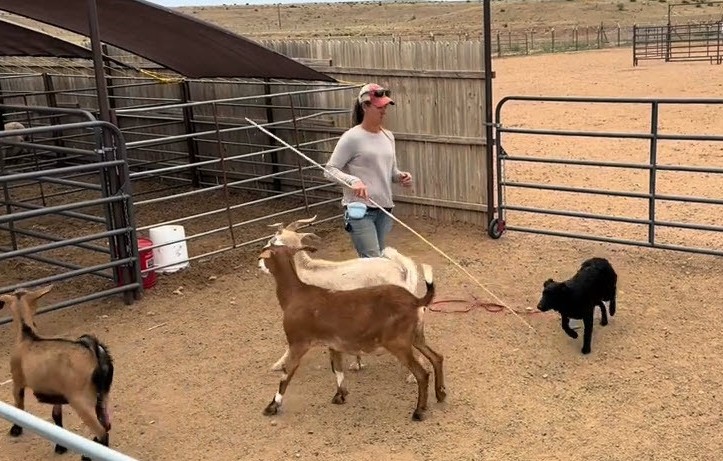
Because when we understand the “why,” we gain the ability to teach. We can guide instead of react. We can show our dogs how to be right instead of just telling them when they’re wrong.
Our dogs are always giving us information. Every behavior—good or bad—is feedback. And when we learn to read that feedback, everything changes.
“When we change the way we look at things, the things we look at change.” — Wayne Dyer
And when we change the way we look at our dogs, we also change the way we respond to them. We become more thoughtful, more intentional, and more fair. And in that shift, we don’t just improve performance—we build trust, confidence, and a true partnership.
Get The Working Line in your inbox
Straight talk on training the working stockdog: new posts, training insights, and what we're learning on stock. No fluff, no spam.
We'll never sell your information or clutter your inbox.
